
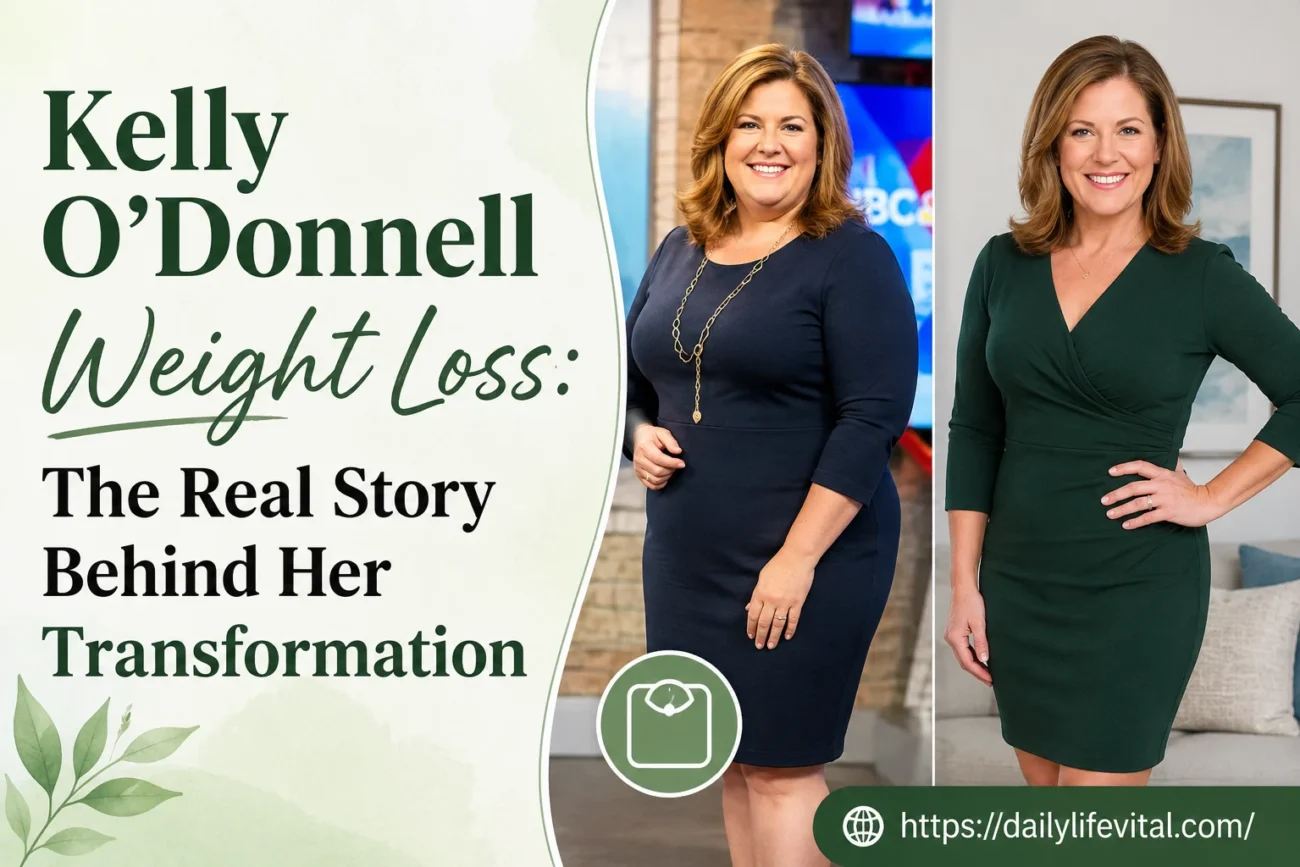
Viewers noticed the change. Headlines followed. But most articles got the story wrong. Here is what actually happened — straight from what Kelly herself has said.
If you have watched NBC News recently and thought something looked different about Kelly O’Donnell, you are not imagining it. The veteran political journalist has visibly transformed — and unlike most celebrity weight loss stories, this one has a clear, honest explanation.
Kelly O’Donnell has been one of the most recognisable faces in American political journalism for over 30 years. So when viewers began noticing a significant change in her appearance on NBC Nightly News and Meet the Press, the questions started pouring in online. What happened? Was she sick? Did she have surgery? Is it Ozempic?
The answer, it turns out, is more straightforward — and more instructive — than the breathless transformation articles flooding search results would have you believe. Kelly has spoken about it herself, and the real story is one of medical management, a life change, and a shift in daily habits. No dramatic 30-day plan. No surgery. No secret.
Who Is Kelly O’Donnell?
Before we get to the transformation, it is worth knowing who we are actually talking about — because a surprising number of articles confuse her with someone else entirely.
Kelly O’Donnell (NBC News journalist) and Rosie O’Donnell (comedian and TV personality) are two completely different people. Both have been linked to Mounjaro in recent coverage, which causes frequent mix-ups in search results. This article is about Kelly O’Donnell, the NBC News journalist.
Kelly O’Donnell was born on May 17, 1965, in Cleveland, Ohio. She graduated from Northwestern University in 1987 with a degree in journalism and public policy, then built her career from the ground up at WJW-TV in Cleveland before joining NBC News in 1994 — where she has remained ever since.
Over more than three decades, she has covered some of the most significant moments in modern American history: the Oklahoma City bombing in 1995, the September 11 attacks, the Iraq War (where she was embedded with the 3rd Infantry Division in Baghdad), the death of Pope John Paul II, and multiple presidential campaigns. She was the first journalist to report live on television that Hillary Clinton had called Donald Trump to concede the 2016 presidential election.
Currently, she serves as NBC’s chief justice and national affairs correspondent, covering the Justice Department and appearing across NBC Nightly News, Today, and Meet the Press. She was elected president of the White House Correspondents’ Association for the 2023–2024 term and has won multiple Emmy Awards. Her grandparents on both sides came from Ireland, and she holds Irish citizenship — a detail that would become relevant to her weight loss story.
What Viewers Noticed — and Why They Were Asking
The change in Kelly O’Donnell’s appearance became widely noticeable to regular viewers of NBC News sometime in 2024 and into 2025. She appeared visibly slimmer on screen — a significant shift from the figure audiences had grown familiar with over decades of broadcasts.
For anyone who has followed her career, the difference was striking. Public figures who appear on television regularly become familiar in a particular way — viewers develop a mental baseline for how someone looks, and any meaningful departure from that baseline registers immediately. Social media threads filled with comments ranging from concern to admiration, and search interest in her transformation spiked.
I love Kelly O’Donnell, but I still find her dramatic weight loss mildly shocking. I’m glad for her — I’m sure she feels healthier, and she looks great.
Viewer comment on Threads, June 2024
What followed in the media, unfortunately, was largely speculation dressed up as reporting. Articles confidently described workout schedules she supposedly followed five days a week, meal plans her nutritionist had supposedly designed, and specific pound totals she had allegedly lost — all without citing a single interview or statement from Kelly herself.
Most online articles about Kelly O’Donnell’s weight loss are not drawing from real interviews. Specific claims about “50 pounds lost,” exact workout routines, and detailed meal plans are fabricated filler. This article sticks to what Kelly has actually said and what is confirmed.
The Mounjaro Factor: What Kelly Has Actually Said
Here is where the confirmed information begins. Kelly O’Donnell’s weight loss has been publicly linked to Mounjaro — a prescription medication she takes to manage diabetes. This is not tabloid speculation. It is grounded in statements she and her family have made.
The most direct public confirmation came through family channels rather than a formal press statement. The core of what has been confirmed: Kelly is taking Mounjaro (tirzepatide) for diabetes management, and weight loss is a documented side effect of the medication. This is a crucial distinction — she did not go seeking a weight loss drug. She was managing a medical condition, and the weight loss followed.
Mounjaro is FDA-approved as a treatment for type 2 diabetes. Weight loss is a documented side effect of the medication — not its primary purpose for most people who are prescribed it. Kelly was not using it as a cosmetic weight loss tool. She was treating a chronic health condition.
This is also what separates Kelly’s story from a lot of the celebrity Mounjaro coverage you see online. Many public figures have sought out GLP-1 medications specifically to lose weight. Kelly’s situation is different: the medication came first as a medical necessity, and the visible transformation was a consequence of treatment — not the goal.
The Ireland Move That Changed Everything
The medication is only part of the story. The second, equally important factor is a major life change: Kelly O’Donnell relocated to Ireland.
This is not as surprising as it might seem. Kelly’s grandparents on both sides came from Ireland, she holds Irish citizenship, and she has maintained deep personal ties to the country throughout her life. The move represented a return to roots as much as it was a relocation.
But the practical consequences of that move on her daily habits were significant. When she was based in Los Angeles, Kelly had a personal chef. Meals were prepared for her. She did not need to think about what she was eating, how much of it was on the plate, or what went into it. That is not a criticism — it is simply the reality of how many high-profile professionals in demanding careers manage their time.
When she moved to Ireland, the chef was gone. Suddenly Kelly was cooking her own meals — planning them, preparing them, buying the ingredients. That shift alone, as anyone who has made a similar change knows, tends to dramatically reduce calorie intake without requiring any formal diet. When you cook for yourself, you are more aware of portions. You make different choices. You eat differently.
“Research consistently shows that people who cook their own meals consume fewer calories on average than those who rely on prepared food or restaurant meals — not because they’re trying to eat less, but because home cooking naturally involves more awareness of ingredients and portion sizes.”
Finding from nutritional science literature · Referenced across multiple dietary behaviour studiesBeyond the cooking change, relocating to a different country — adjusting to a new pace of life, a different environment, likely more walking, different social rhythms — tends to shift the body’s baseline in ways that are hard to quantify but very real. Ireland’s lifestyle is, by most measures, less sedentary and less food-saturated than urban Los Angeles.
Two Factors Working Together
This is the complete picture of Kelly’s transformation:
- Mounjaro (tirzepatide) — taken for diabetes management, which naturally reduces appetite, slows digestion, and makes eating less food feel easier and more sustainable.
- Relocating to Ireland — ending a dependency on a personal chef, cooking her own meals, and adjusting to a significantly different daily routine and environment.
That is the whole story. There was no dramatic transformation plan, no 30-day challenge, no celebrity trainer or five-day-a-week strength programme. The real explanation is more mundane — and arguably more useful — than any of the fabricated versions.
How Mounjaro Actually Works — The Science Explained Simply
Since Mounjaro is central to Kelly’s story, it is worth understanding what it actually does inside the body. The science behind it is genuinely fascinating and helps explain why it is so effective compared to earlier medications.
What Is Mounjaro?
Mounjaro is the brand name for tirzepatide, a medication developed by Eli Lilly. It belongs to a new class of therapy called a dual GIP and GLP-1 receptor agonist. That mouthful of a name matters, because it is what makes Mounjaro different from earlier diabetes and weight medications like Ozempic (semaglutide).
Mounjaro (Tirzepatide)
- Activates both GLP-1 and GIP receptors simultaneously
- Dual-agonist mechanism amplifies metabolic effects
- Clinical trials showed up to 21% body weight reduction at highest dose
- FDA-approved for type 2 diabetes; also approved for obesity as Zepbound
- Once-weekly injection via pre-filled pen
Ozempic / Wegovy (Semaglutide)
- Activates GLP-1 receptor only (single-agonist)
- Effective, but less powerful than dual-agonist approach
- Rosie O’Donnell experienced nausea on Wegovy; switched to Mounjaro
- Not appropriate for everyone; side effects vary significantly
- Also a once-weekly injection
What Do GLP-1 and GIP Actually Do?
Both GLP-1 (glucagon-like peptide-1) and GIP (glucose-dependent insulinotropic polypeptide) are incretin hormones — natural chemicals your gut releases in response to food. They play a central role in how your body manages blood sugar and appetite.
- GLP-1 tells your brain you are full, slows digestion so food stays in your stomach longer, stimulates insulin release, and suppresses glucagon (a hormone that raises blood sugar). The result: you feel satisfied sooner and stay satisfied longer.
- GIP also boosts insulin secretion and has been shown to improve fat metabolism and energy expenditure — meaning it helps your body burn stored fat more effectively.
Mounjaro activates receptors for both of these hormones simultaneously. That dual activation is what researchers call a “first-in-class” mechanism — nothing else works quite this way. The combined effect is a more powerful reduction in appetite, better blood sugar control, and more meaningful changes in body composition than single-agonist medications achieve.
Think of Mounjaro as sending two separate “I’m full” signals to your brain instead of one — while also helping your body manage blood sugar more efficiently. The result is that many people find they naturally want to eat less, without feeling deprived or fighting constant cravings. For people with diabetes, this also means better disease control alongside the weight change.
What the Clinical Trials Actually Showed
The clinical data behind tirzepatide is, by medical standards, genuinely impressive. In trials, participants using the highest dose of 15 milligrams lost as much as 21% of their body weight. That is a level of efficacy that had not been seen in diabetes or obesity medications previously. More importantly, those results came with improved blood sugar control — without putting patients at significant risk of dangerous low blood sugar levels (hypoglycaemia).
Mounjaro requires a prescription and is not appropriate for everyone. People with a personal or family history of medullary thyroid carcinoma or Multiple Endocrine Neoplasia syndrome type 2 should not take it. Common side effects include nausea, diarrhoea, and reduced appetite. Always consult a qualified physician before considering any GLP-1 or GIP medication.
What Kelly O’Donnell’s Story Really Means
Most celebrity weight loss coverage follows a predictable formula: dramatic before-and-after framing, a tidy narrative of discipline and hard work, and a list of actionable tips the reader can supposedly replicate. Kelly’s story doesn’t fit that template — and that is precisely what makes it more useful.
Here is what her experience actually illustrates:
Medically-supported weight change is real weight change
Kelly was not gaming the system or taking a shortcut. She was treating a chronic medical condition — diabetes — with an appropriate prescription. The weight loss was a documented side effect of that treatment. This is how a significant number of people with type 2 diabetes experience this class of medication.
Environmental changes matter enormously
Moving to a different country, losing a personal chef, cooking for yourself — none of these are things most people think of as “diet advice.” But they produced measurable results. Your environment shapes your eating behaviour more than willpower does. Changing your surroundings changes your habits.
Age is not a ceiling
Kelly was in her late 50s when this transformation became visible to the public. Her story is a clear illustration that meaningful health change is not the exclusive domain of people in their 20s and 30s. The body responds to the right conditions at any age.
Transparency is rare — and valuable
Most public figures who undergo significant physical transformations either stay silent or attribute the change to vague lifestyle improvements. Kelly’s openness about medication and life change is more honest than most celebrity health narratives, and more instructive for it.
5 Honest Lessons From Kelly’s Transformation
Even if Mounjaro is not relevant to your situation — and for most people, it won’t be — Kelly’s experience contains genuinely useful lessons about sustainable health change.
1. Address the underlying condition first
Kelly was not approaching weight as a vanity project. She was managing diabetes, and the medication that helped her manage it also changed her relationship with food and appetite. The lesson: if you have an underlying health condition affecting your weight, treating the condition is not separate from addressing the weight — it is often the same intervention.
2. Cook your own food
This sounds almost offensively simple, but the evidence behind it is solid. People who regularly cook at home consume fewer calories, eat more whole foods, and have a greater awareness of portion sizes — not because they are trying harder, but because the act of preparing food changes your relationship with it. When you cook for yourself, you make different choices automatically.
3. Treat your environment as a health intervention
You do not have to move to Ireland. But the principle applies everywhere: the environment you live and eat in shapes your behaviour more than intentions do. If your kitchen is full of processed food, you will eat processed food. If you live in a walkable neighbourhood, you will walk more. If you have easy access to healthy ingredients, you will cook with them. Changing your environment changes your outcomes — often without requiring conscious effort.
4. Slow, medically-supported change is legitimate change
There is a persistent cultural narrative that real transformation requires suffering — a brutal diet, a punishing exercise regime, white-knuckle willpower. Kelly’s story offers a different model: gradual change supported by medical treatment and daily habit shifts. That kind of change is harder to market as a 30-day plan, but it tends to last.
5. Talk to your doctor before anything else
The only reason Kelly was on Mounjaro is that a physician prescribed it for a specific medical condition. GLP-1 and GIP medications are powerful tools, but they are not appropriate for everyone, they come with real side effects, and they require proper medical supervision. If you are curious about whether these medications might be relevant to your own health, that conversation starts with your doctor — not a search engine.
🌿 The Bottom Line
Kelly O’Donnell’s weight loss came from two intersecting factors: Mounjaro, a prescription medication she takes for diabetes management, and a significant lifestyle shift after relocating to Ireland and losing access to a personal chef. There was no dramatic plan, no secret, and no surgery. Her story is a reminder that the most effective health changes tend to be the least glamorous ones — medical support, environmental change, and consistency over time.
Frequently Asked Questions
How much weight did Kelly O’Donnell lose?
No specific figure has been confirmed by Kelly or her representatives. The “50 pounds” number cited across many websites is not sourced from any interview or official statement. It is speculation presented as fact. What is clear from public observation is that the change was significant and visible over an extended period.
Did Kelly O’Donnell take Ozempic?
No. The medication confirmed in connection with Kelly O’Donnell’s weight change is Mounjaro (tirzepatide), not Ozempic (semaglutide). These are different drugs. Both are incretin-based medications, but Mounjaro activates two receptors (GLP-1 and GIP) while Ozempic activates only one.
Is Kelly O’Donnell the same as Rosie O’Donnell?
No. They are two completely different people. Kelly O’Donnell is an NBC News political journalist born in Cleveland, Ohio. Rosie O’Donnell is a comedian and television personality. Both have been discussed in connection with Mounjaro, which causes significant confusion in search results.
Why did Kelly O’Donnell move to Ireland?
Kelly has Irish ancestry — her grandparents on both sides were from Ireland — and she holds Irish citizenship. The move appears to have been a personal decision tied to her heritage and life circumstances. It also coincided with a change in her daily habits, including cooking her own meals after previously having a personal chef in Los Angeles.
Can I take Mounjaro for weight loss?
Mounjaro is FDA-approved for type 2 diabetes and, under the brand name Zepbound, for obesity management. Whether it is appropriate for you depends on your health history, existing conditions, and a consultation with a qualified physician. It is not suitable for people with certain thyroid conditions or related syndromes. Do not self-prescribe or seek it without medical supervision.
Is Kelly O’Donnell still working at NBC News?
Yes. As of 2026, Kelly O’Donnell continues in her role as NBC’s chief justice and national affairs correspondent, appearing on NBC Nightly News, Today, and Meet the Press.
Sources & References
- Wikipedia. Kelly O’Donnell — Biography. Accessed June 2026.
- TODAY.com. Rosie O’Donnell says new clothing size is ‘shocking’ after losing weight on Mounjaro. March 2025.
- UCHealth. What is Mounjaro and how does it work for weight loss? June 2026.
- Cleveland Clinic. Tirzepatide (Mounjaro): How It Works & Side Effects. February 2026.
- Mounjaro.lilly.com. How Mounjaro Works — Official HCP Information. Eli Lilly and Company.
- WellsyFit. Kelly O’Donnell Weight Loss: What Actually Happened. April 2026.
- Yahoo Lifestyle. Rosie O’Donnell, Amy Schumer and More Stars Who’ve Spoken About Using Mounjaro. May 2025.